- Hardwood
Hardwood Flooring for Billings New Builds: Solid vs. Engineered and Which One Contractors Choose
August 19, 2026
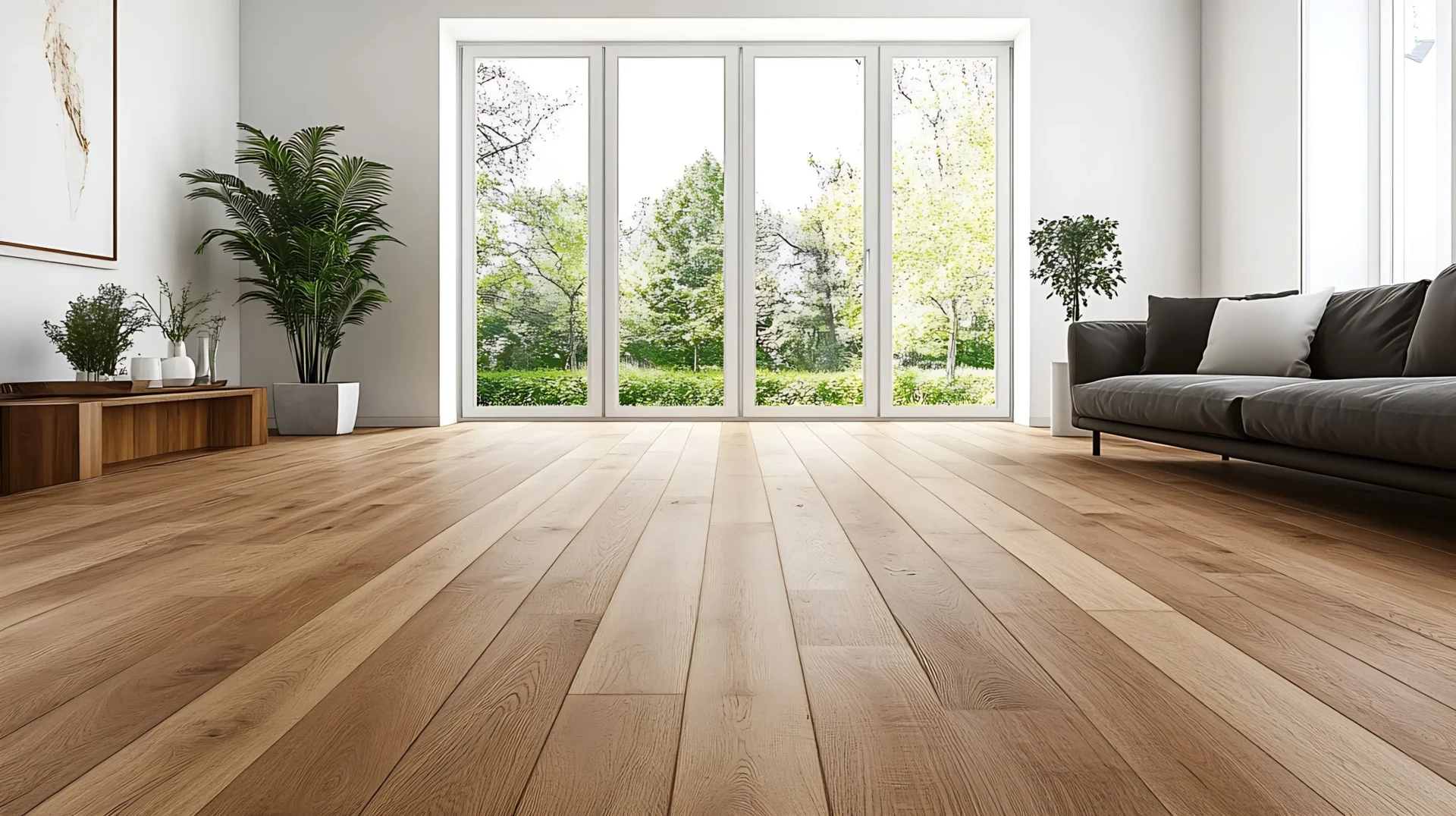
Most Billings contractors who have been building homes in the Heights and West End for more than a few years land in the same place when it comes to hardwood flooring: engineered in the main living areas, LVP or tile in the wet rooms, and solid hardwood only when the client specifically requests it and the subfloor situation supports it.
That default is not laziness. It reflects real experience with what works in Montana’s climate, what installs reliably on a construction schedule, and what holds up over the first decade in a new home. Getting the hardwood flooring installation right in a Billings new build starts before the product is ever selected — it starts with the subfloor plan and the construction timeline.
Call Carpet Barn at (406) 656-2824 or stop by 2032 Grand Ave to talk through your project. The team works directly with Billings builders and contractors and can engage early in the construction process to get the flooring specification right from the start.
Why Most Billings Contractors Default to Engineered Hardwood
New construction presents a flooring challenge that existing-home remodels don’t: the building is still drying out.
A newly framed Billings home contains significant residual moisture in the lumber. Concrete slabs — poured for garages and basement areas — continue to off-gas moisture for months after the pour. Per ACI 308 standards, a minimum 28-day cure is recommended before moisture testing, and in Billings’ climate, slabs often need 60-90 days before meeting most flooring manufacturer moisture thresholds. That environment is hostile to solid hardwood, which requires stable conditions to install correctly.
Engineered hardwood handles that variability. Its cross-laminated core resists expansion and contraction across a wider moisture content range than solid wood, and it can typically be installed sooner in the construction timeline — before the HVAC has fully stabilized the indoor environment. That timing advantage matters on a build schedule.
There is also a subfloor flexibility argument. New builds in Billings increasingly use concrete at grade and wood-frame subfloors above — sometimes in the same home. Engineered hardwood can be glued to concrete or floated over wood, giving contractors one product that works across multiple subfloor types on the same project. Solid hardwood typically requires an above-grade wood subfloor.
“We use Carpet Barn for all of our home builds and remodels. They’re always on point. Great deals, and customer service couldn’t be better.” — Ryan D., Billings contractor
What Engineered Hardwood Actually Delivers in a New Build
For homeowners going through the new build specification process for the first time, it helps to understand exactly what you’re getting.
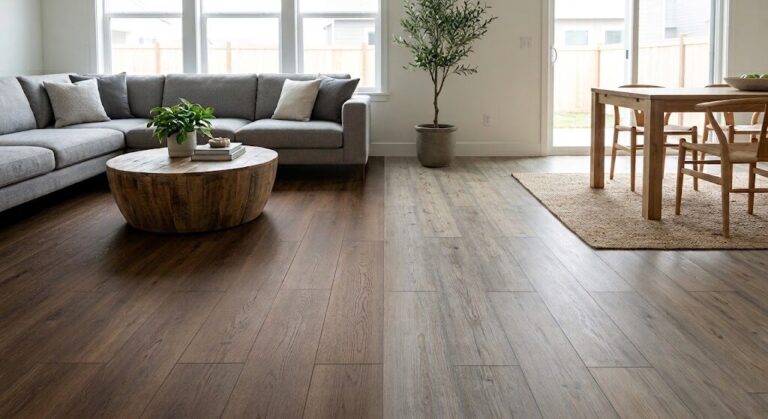
The surface veneer is genuine hardwood — the same species, grain, and visual character you’d get with solid wood. White oak, hickory, maple, and walnut are the most commonly specified species in current Billings new builds, with wide-plank formats in warm neutral tones leading the design direction. The cross-laminated core beneath stabilizes the plank against the humidity swings Billings homes experience between heating and non-heating seasons.
The key variable is wear layer thickness. For a new build where the homeowner plans to stay 20 or 30 years, specifying 3mm or more preserves the option to refinish the floor once or twice over the home’s life. See the Carpet Barn guide to engineered hardwood refinishing in Billings for a full breakdown of what wear layer thickness means for refinishing potential.
Browse the engineered hardwood collection at cbarn.com and note the wear layer specs listed for each product before finalizing a specification.
When Solid Hardwood Makes Sense in a Billings New Build
Solid hardwood does have a place in Billings new construction — just a specific one.
The conditions that make it viable: the subfloor is above-grade wood with moisture content between 6-9% (the standard range for interior wood in Billings’ climate) before installation begins. The HVAC system is operational and has stabilized indoor RH between 35-55% before product goes down. The timeline allows NWFA-recommended acclimation — a minimum of 3 days in controlled conditions, but 5-7 days in a newly constructed Billings home, and 10 or more days during heating season when indoor humidity is hardest to manage.
When those conditions are met, solid hardwood provides the maximum refinishing potential over the life of the home and carries a stronger resale signal in the upper-end Billings market. Buyers recognize solid wood floors, and they register differently than engineered in listing photos and walkthroughs.
When those conditions are not met — if the HVAC isn’t stabilized, if the timeline is tight, or if any slab areas are part of the floor plan — solid hardwood is a risk that engineered hardwood avoids entirely.
“Purchased laminate flooring for our new build. Astasia was wonderful at handling our project and helping us every step of the way! She’s amazing at her job and we recommend her!” — Renee C., Billings new build homeowner
Which Subfloor Type Drives the Hardwood Flooring Decision in Billings New Construction?
In a new build context, the flooring specification conversation starts with the subfloor plan — not the product catalog.
Wood-frame above grade (most common in single-family residential): suited for both engineered and solid hardwood, provided moisture is managed correctly during construction. Carpet Barn works with builders to confirm acclimation timing relative to build schedules.
Concrete slab at grade (common in Heights and West End developments with walk-out basements and open-concept main floors): engineered hardwood on concrete is standard; solid hardwood is not. Moisture testing of the slab is required before installation regardless of product.
Mixed subfloor (partial basement slab below and wood frame above): engineered hardwood is the practical choice because one product handles both zones with a continuous visual result across the full floor plan.
The Carpet Barn commercial team engages with Billings builders early in the project to avoid subfloor-product mismatches that cause installation delays. Call (406) 656-2824 or contact the commercial team at cbarn.com — early engagement is one of the most reliable ways to keep a flooring installation on schedule.
What Billings New Build Buyers Are Choosing Right Now
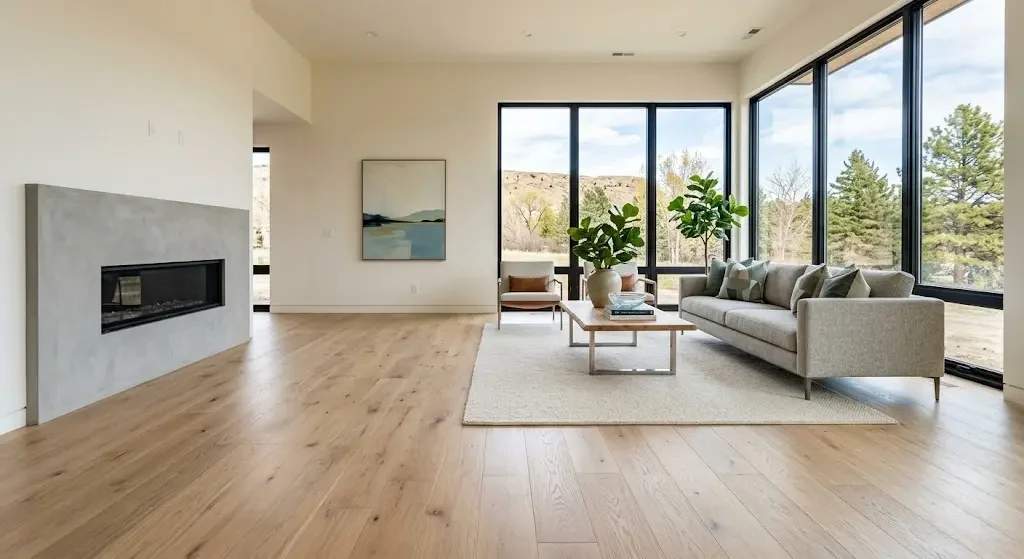
Design direction in Billings new construction has moved clearly and consistently: wide planks, warm tones, lower sheen. The era of narrow-strip honey oak is behind this market.
Species: White oak leads, followed by hickory for projects where natural variation and durability are priorities. Walnut appears in higher-end builds. Maple has lost ground in the floor category — its uniform grain reads as dated in current open-concept layouts.
Format: Wide planks (5 inches and above) dominate. Narrower strips still appear in traditional and farmhouse-adjacent projects, but open floor plans have made wide planks the visual default.
Finish: Satin and matte. High-gloss is functionally obsolete in the new build market — it shows every footprint. Wire-brushed matte textures are increasingly popular because the random surface pattern diffuses light and hides minor scratches and footprints effectively.
Color: Warm neutrals and natural tones. The cool-gray trend has passed its peak. Buyers are moving toward honey, warm medium, and natural tones that age well and pair with a wider range of cabinet and furniture finishes.
How Carpet Barn Works With Billings Builders and Contractors
Carpet Barn has been supplying and installing flooring for Billings new construction projects for over 50 years. As a member of the National Flooring Alliance (NFA), the store has access to preferred vendor pricing and product depth that matters on larger projects — the kind of volume relationships that make consistent spec availability and competitive pricing possible across multiple units or phases.
For builders and contractors, the commercial account program includes early-stage subfloor assessment and product specification support, sample coordination for buyer selection appointments, volume ordering with lead time management built around construction schedules, and licensed-and-insured installation crews experienced with new construction timelines.
For homeowners working with a builder and wanting to specify flooring outside the builder’s standard allowance, Carpet Barn coordinates with both parties on product selection, ordering, and installation scheduling.
“The subfloor conversation and the construction schedule are the two things we need to know before anything else. Get those right and the product decision is straightforward. Skip them and you’re correcting problems after the floor is down.” — World Famous Carpet Barn commercial team, Billings, MT
Stop by the showroom at 2032 Grand Ave, browse the engineered hardwood and solid hardwood collections at cbarn.com, or call (406) 656-2824 to set up a commercial account consultation. Site visits for larger projects are available.
Frequently Asked Questions
Should I use engineered hardwood or solid hardwood in a Billings new build?
Most Billings contractors default to engineered hardwood because it handles construction moisture variability better, installs across both concrete and wood subfloors, and fits tighter build schedules. Solid hardwood is appropriate when the HVAC is fully operational before installation, the subfloor moisture content is 6-9%, and the timeline allows 5-7 days of acclimation minimum. For most new builds, engineered with a 3mm or thicker wear layer is the practical choice.
Can hardwood flooring be installed on a concrete slab in a new Billings home?
Engineered hardwood can be glued directly to a concrete slab, provided the slab passes a moisture test (calcium chloride or RH probe) before installation. Per ACI 308 standards, slabs need a minimum 28-day cure before testing, and in Billings’ climate, 60-90 days is often more practical before manufacturer moisture thresholds are met. Solid hardwood is not appropriate for slab installation.
What wear layer thickness should I specify for a Billings new build?
For a homeowner planning to stay long-term, specify 3mm or more. This supports two or more refinishing cycles over the life of the floor. Builder-grade engineered hardwood is often priced attractively but comes with thinner wear layers that limit refinishing options. Always ask for the wear layer spec in millimeters before finalizing any engineered hardwood selection.
What hardwood species are most popular in new Billings homes right now?
White oak leads in current Billings new construction, followed by hickory. Walnut appears in higher-end builds. Wide-plank formats (5 inches and above) dominate, and satin or wire-brushed matte finishes have largely replaced high-gloss. Warm neutral and natural tones have overtaken the cool-gray trend that peaked a few years ago.
Does Carpet Barn work with Billings builders and contractors directly?
Yes. Carpet Barn has a commercial account program for Billings builders and contractors that includes early-stage specification support, volume ordering, and licensed-and-insured installation crews experienced with new construction timelines. Call (406) 656-2824 to start the conversation.
How early in the construction process should flooring be specified for a Billings new build?
Ideally before framing, so subfloor type and moisture management can be coordinated with the flooring product requirements. At minimum, finalize the flooring decision before drywall is complete to allow time for product ordering, slab moisture testing where applicable, and acclimation scheduling before the installation window opens.