- Tile
How to Choose Tile for Your Billings Kitchen or Bathroom (Without the Regret)
July 15, 2026
Tile decisions haunt people.
Not because the product is difficult — tile is one of the most durable surfaces you can put in a home. The regret usually comes from one of three places: the grout color that looked elegant in the sample and looks dingy six months later, the stone that nobody told you needs to be sealed every year, or the smooth tile that turns into a skating rink the moment someone steps out of the shower.
Knowing how to choose tile flooring for a Billings kitchen or bathroom comes down to four decisions that most people make in the wrong order. Stop by the showroom at 2032 Grand Ave or call (406) 656-2824 to book a free design consultation — it’s the fastest way to avoid the mistakes this article describes.
Here is what to know before you walk into the showroom.
Porcelain or Ceramic: Which Tile Is Right for Your Billings Kitchen or Bathroom?
Most homeowners treat porcelain and ceramic as interchangeable. They’re close — but not identical, and the difference matters in wet applications.
Both are fired clay products, but porcelain is fired at a higher temperature, which makes it denser and less porous. Porcelain absorbs less than 0.5% water by weight (per ASTM C373 testing, the standard that determines porcelain classification), while standard ceramic absorbs significantly more. In a Billings bathroom or kitchen where steam, spills, and damp mop water are routine, that density difference shows up over years of use.
For floors in wet areas — bathroom floors, shower pans, kitchen areas near the sink — porcelain is the stronger choice. It resists staining, handles temperature fluctuations in mudroom and utility applications, and chips less visibly because the color runs through the body of the tile.
For backsplashes, accent walls, and dry areas, ceramic is a perfectly capable option. It costs less, comes in a wider range of surface designs at the mid-market level, and for walls performs as well as porcelain.
The team at Carpet Barn typically recommends: porcelain on floors, ceramic on walls, unless you have a specific reason to do otherwise. See the full tile brands and collections at cbarn.com to get a sense of the range before your visit.
The Texture Decision You Can’t Undo
Surface texture is the safety decision in tile selection, and it’s one most homeowners underweight until there’s an incident.
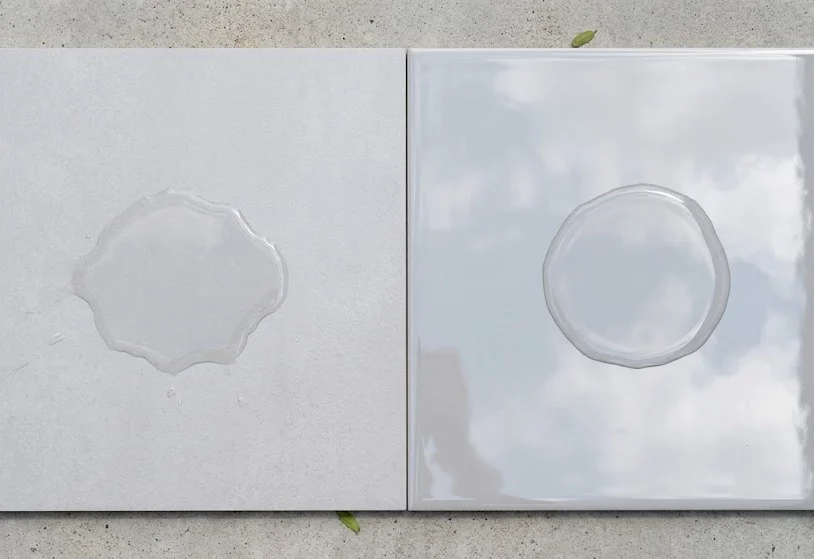
A high-gloss tile looks beautiful in a showroom. It photographs well. It is also visually indistinguishable from the matte alternative — until you’re standing on one wet. In a Billings bathroom floor, or anywhere near a shower, high-gloss is a poor choice unless the tile has a confirmed wet-use Coefficient of Friction rating.
ANSI A326.3 — the American National Standard for measuring Dynamic Coefficient of Friction — specifies a DCOF of 0.42 or higher for wet pedestrian use. Most quality tile manufacturers now publish DCOF ratings per this standard. For bathroom floors and shower pans in Billings homes, look for tiles rated for wet use. Matte, textured, and satin finishes almost always qualify.
For kitchen floors, a semi-matte or lightly textured tile balances slip resistance and ease of cleaning well. A deeply textured tile with prominent grout lines is safer and more comfortable underfoot, but collects cooking grease more aggressively and takes longer to clean. For most Billings kitchens, a light texture with tight grout lines hits the right mark.
The Grout Problem That Catches Billings Homeowners Off Guard
Grout is responsible for more tile regret than the tile itself — and in Billings, there is a local factor that makes the grout decision more important than it is in most cities.
The municipal water supply draws from the Yellowstone River and carries calcium and magnesium mineral content that accelerates deposit buildup in tile grout lines. Light-colored grout that looked crisp at installation can develop a yellow or gray cast within two or three years without consistent sealing and maintenance. This is not a failure of the product — it is a function of Billings water chemistry interacting with porous cement grout.
Light grout (white, cream, light gray): shows mineral deposits and soap scum most visibly. Looks cleanest when freshly done. Requires the most ongoing maintenance to stay that way. For most Billings households, it eventually becomes a regret.
Mid-tone grout (medium gray, warm beige, charcoal): the practical middle ground. Doesn’t show mineral deposits as aggressively as white. Ages gracefully with normal cleaning. This is where most experienced Billings installers land for kitchen and bathroom floors.
Dark grout (dark gray, charcoal, near-black): hides mineral deposits and everyday grime well. Shows light dust and dried water spots in high-traffic areas. In bathrooms with good ventilation, it ages very well.
“The homeowners who are happiest with their tile choices are almost always the ones who came in with a photo and let us help them narrow down the grout color alongside the tile. The ones who pick the grout from a small chip in isolation — that’s where regret starts.” — World Famous Carpet Barn design team, Billings, MT
One product consideration that changes the maintenance equation significantly: epoxy grout. Standard cement-based grout is porous and requires sealing to resist staining. Epoxy grout is non-porous, highly stain-resistant, and does not require sealing — it costs more upfront but dramatically reduces ongoing maintenance. It is also harder to work with: epoxy sets quickly, and any grout left on the tile face that hardens before wiping is difficult to remove. Professional installation is strongly recommended when using epoxy.
The team at Carpet Barn can walk you through grout options alongside your tile selection. Book a free design consultation at cbarn.com/contact-us/ and bring a photo of the space — it narrows the grout color decision faster than looking at samples in isolation.
Natural Stone: Beautiful, Demanding, and Worth Knowing Before You Buy
Natural stone tile — marble, travertine, slate, limestone, granite — sits in a different category from ceramic and porcelain. It is not manufactured to a consistent standard. Every tile carries the natural variation of the stone it came from. And it requires ongoing care that no manufactured tile does.
The core issue is porosity. Most natural stone absorbs liquids, oils, and minerals if it isn’t properly sealed. In a Billings kitchen, an unsealed marble or travertine tile floor that gets red wine, olive oil, or acidic cleaner on it will stain — and those stains are difficult to fully remove. Sealing is not a one-time step: marble and travertine typically need resealing every 1-2 years, granite every 3-5 years, and slate varies by porosity.
A simple water bead test tells you when resealing is due: if water no longer beads on the surface and instead spreads and soaks in, the sealer has worn. Don’t wait for a stain to deliver that message.
Before installing natural stone in a kitchen or bathroom, ask your installer: What is the porosity rating of this specific stone? Does it need to be sealed before grouting? (Yes, for most stone.) What cleaning products are safe on this surface? Acidic cleaners — including many common bathroom sprays — etch marble and travertine and can cause permanent surface damage.
Carpet Barn carries a selection of natural stone tile options and the team can connect you with the right sealer and care products at installation. See also the tile care and maintenance guide at cbarn.com for product-specific cleaning recommendations.
Large Format Tile: The Visual Win With One Installation Caveat
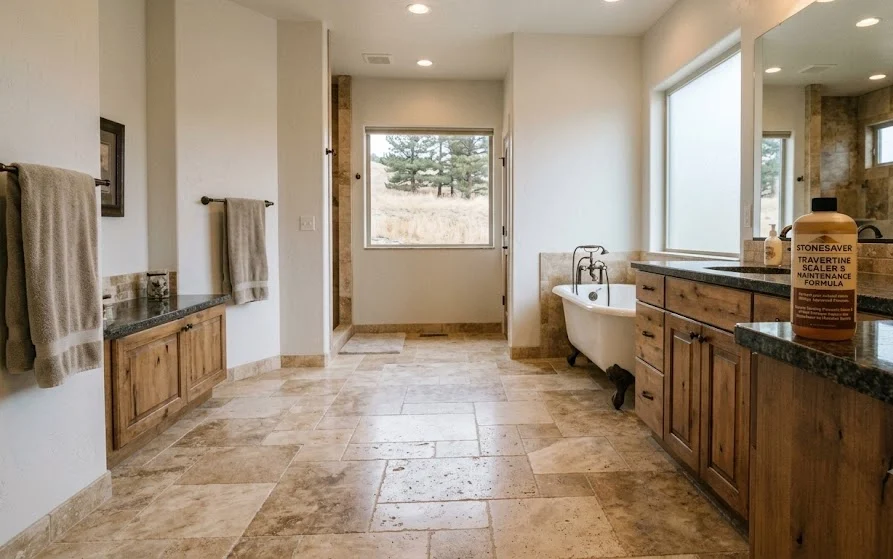
Large format tile — anything with at least one edge longer than 15 inches, per TCNA (Tile Council of North America) standards — dominates residential remodeling for a reason. Fewer grout lines create a cleaner, more open look, and oversized formats make small rooms feel genuinely larger.
In Billings homes, there is one installation consideration that matters more than it does in warmer climates: subfloor flatness. Large format tile is unforgiving of a subfloor that is not perfectly flat. Any variation greater than 1/8 inch over a 10-foot span will show up as lippage — a visible height difference between adjacent tiles that you feel with every step.
Billings homes with wood-framed floors and older joists often need subfloor leveling before large format tile can go in correctly. This is a standard professional installation step, not a dealbreaker — but it is a reason that DIY installation of large format tile frequently produces results that look fine at first and reveal their issues at 18 months. Carpet Barn’s in-home measurement includes a subfloor assessment for all tile projects.
Grout Line Width: The Detail That Changes How Everything Looks
One final decision affects how the finished floor reads more than most homeowners expect. Grout line width — the spacing between tiles — determines the visual prominence of the grout in the finished installation.
Tight grout lines (1/16 to 1/8 inch) give a cleaner, more contemporary look and reduce the visual weight of the grout color. They work best with rectified tile — tile that has been precision-cut so the edges are consistent enough to allow minimal spacing. This is the combination that delivers the most seamless finished result.
Wider grout lines (1/4 to 3/8 inch) are more traditional in appearance and accommodate the slight dimensional variation of non-rectified tile. They also provide slightly more room for the tile and grout to respond to temperature changes — in a Billings home that cycles from cold winters to warm summers, that small accommodation is not irrelevant.
For most Billings kitchen and bathroom projects, rectified porcelain with 1/8-inch grout lines and a mid-tone epoxy or sealed cement grout is the combination that delivers the best balance of visual quality and long-term ease of maintenance.
“Most homeowners focus on the tile and pick the grout line width last, almost as an afterthought. We reverse that conversation — the grout line decision shapes everything else. Get that right first and the tile selection becomes a lot simpler.” — World Famous Carpet Barn installation team, Billings, MT
Where to Start Your Billings Tile Project
The best first step for any Billings tile project is a conversation before you’ve committed to anything.
Bring a photo of the space — the existing floor, the cabinetry or vanity if you have it, and the natural light quality in the room. Tile samples that look one way in a showroom look different at home under your specific lighting conditions. A side-by-side comparison in your actual space, before purchase, prevents most of the regret this article describes.
Browse the full tile and natural stone collection at cbarn.com, or stop by the showroom at 2032 Grand Ave in Billings. Free design consultations and in-home measurements are available — call (406) 656-2824 to schedule yours.
Frequently Asked Questions
What is the difference between porcelain and ceramic tile for a Billings kitchen or bathroom?
Porcelain is fired at a higher temperature and absorbs less than 0.5% water by weight (per ASTM C373 testing), making it denser and more resistant to moisture than ceramic. For floor applications in wet areas, porcelain is the stronger choice. Ceramic works well for backsplashes, walls, and dry areas where cost savings matter.
What tile finish is safest for a bathroom floor in Billings?
ANSI A326.3 specifies a Dynamic Coefficient of Friction (DCOF) of 0.42 or higher for wet pedestrian use. Matte, textured, and satin tile finishes almost always meet this standard. High-gloss tile can be used on bathroom walls but is a poor choice for bathroom floors without confirmed wet-use DCOF ratings.
Why does grout color matter so much in Billings homes?
Billings municipal water draws from the Yellowstone River and has high mineral content. Light-colored grout — especially white and cream — shows calcium and magnesium deposits more rapidly than mid-tone or dark grout. The grout color you choose directly affects how much maintenance the installation requires over its lifetime.
Does natural stone tile require more maintenance than porcelain in a Billings home?
Yes. Natural stone is porous and requires sealing before grouting, regular resealing (every 1-2 years for marble and travertine, every 3-5 years for granite, variable for slate), and careful use of cleaning products — acidic cleaners etch marble and travertine. Porcelain requires none of these steps. If low maintenance is a priority, porcelain is the simpler choice.
What is epoxy grout and is it worth it?
Epoxy grout is non-porous and does not require sealing, making it highly resistant to staining, mineral deposits, and cooking grease. It costs more than cement grout and requires professional installation because it sets quickly and is difficult to clean off tile faces once hardened. For kitchens and shower areas in Billings, the long-term maintenance benefit is real.
How do I know if my subfloor can handle large format tile?
Per TCNA (Tile Council of North America) standards, large format tile requires a subfloor that is flat to within 1/8 inch over a 10-foot span. Older Billings homes with wood-framed floors often need leveling before large format tile can be installed without lippage. Carpet Barn’s in-home measurement includes a subfloor assessment for all tile projects.