- Flooring
Best Flooring for Billings Basements: What Actually Works Below Grade in Montana
July 2, 2026
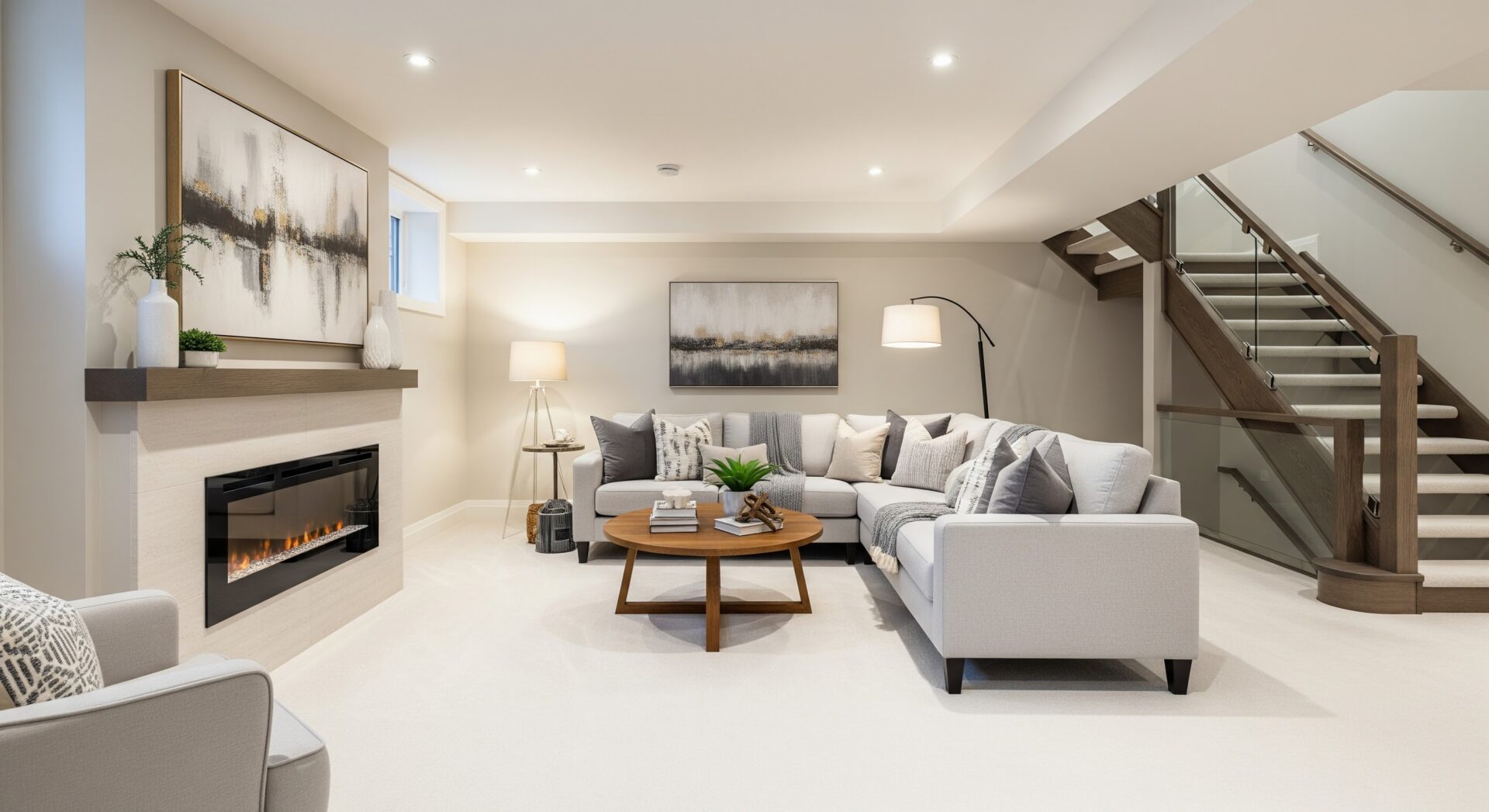
Most Billings homeowners finishing a basement start with the same question: can I put hardwood down here?
The honest answer is no — at least not solid hardwood. And depending on your slab’s moisture history, even engineered hardwood carries real risk below grade. Below grade in Billings is a different environment than the rest of your home, and the product that looks great in your living room can fail completely eight feet lower.
The team at World Famous Carpet Barn has been finishing basements across Billings and Eastern Montana for more than 50 years. Stop by the showroom at 2032 Grand Ave or call (406) 656-2824 — a 30-minute conversation and a slab check can save you from replacing a floor in three years.
Here is what they’ve learned about what works — and what doesn’t — below grade in this climate.
Why Montana Slabs Make Basement Flooring Harder Than It Looks
Billings sits in a semi-arid climate, which gives homeowners a false sense of security about moisture. Summers are dry — indoor humidity typically runs around 37-40% — and it’s easy to assume that extends underground. It doesn’t.
Finding the best flooring for a Montana basement starts with understanding what the slab is doing beneath your feet. Billings area soils include silty loam and clay-heavy alluvial deposits in lower elevations near the Yellowstone that drain slowly. Older homes near downtown and the South Side — many built in the 1950s through 1980s without modern vapor barriers — hold surprising amounts of moisture in their slabs well into summer, even when the slab surface looks and feels dry.
That moisture moves upward through the slab via vapor transmission. Any flooring that contains wood fiber — solid hardwood, standard laminate, even some engineered hardwood — absorbs that vapor over time. The result is expansion, cupping, bubbling, or mold beneath the floor. The products that work below grade are the ones that simply don’t respond to moisture.
What Is the Best Flooring for a Billings Basement?
Luxury Vinyl Plank (LVP) — The Clear First Choice
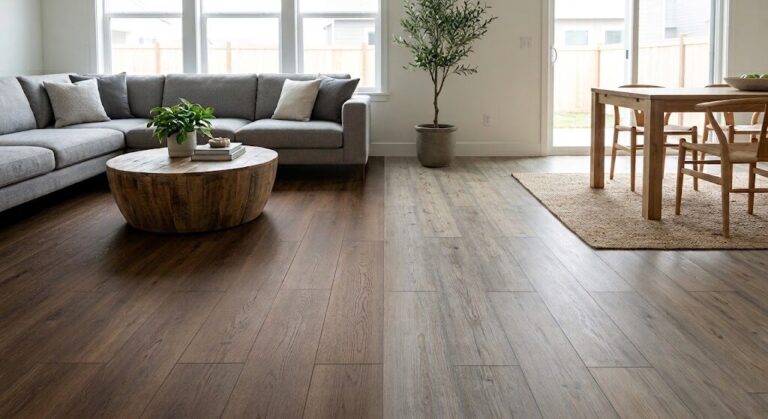
LVP is the default recommendation for Billings basements for one reason: it contains no wood fiber and is 100% waterproof from top to bottom. Slab moisture cannot damage it. Road salt tracked in during winter cannot damage it. A spring thaw that backs up a floor drain can be cleaned up, and the floor stays put.
Here’s the thing — waterproof product does not mean waterproof installation. The subfloor beneath LVP still needs to be moisture-tested before you lay it. LVP won’t be damaged by slab vapor, but an untreated wet subfloor can affect adhesion on glue-down applications and create conditions for odor or mold beneath floating planks.
For Billings basements, choose SPC-core LVP over WPC-core. SPC (stone polymer composite) has a lower thermal expansion coefficient — around 0.05% compared to WPC’s 0.08% — which matters when a Montana basement cycles between a conditioned 70 degrees in summer and 50 degrees unheated in winter. SPC holds its dimensional stability across that range better than WPC.
Browse the vinyl flooring collection at cbarn.com or use the Roomvo visualizer to see LVP options in a photo of your actual space before you visit the showroom.
“We use Carpet Barn for all of our home builds and remodels. They’re always on point. Great deals, and customer service couldn’t be better.” — Ryan D., Billings contractor.
Waterproof Laminate — Good, With Conditions
Waterproof laminate is not the same product as standard laminate. Standard laminate has a wood-fiber core that swells when exposed to moisture and should never go below grade. Waterproof laminate uses a sealed, moisture-resistant core that blocks surface water penetration at the seams.
For Billings basements with low moisture readings and no flooding history, waterproof laminate is a legitimate option. It often delivers a slightly warmer, denser underfoot feel compared to LVP, and the visual quality is strong.
That said, waterproof laminate is water-resistant at the surface — not the core. Prolonged contact with standing water can still cause damage. If your basement has any history of water intrusion, LVP is the safer choice. A free in-home consultation is the fastest way to match the right product to your specific slab conditions.
Carpet — For Finished Bedroom Basements Only
Some Billings homeowners finish a portion of the basement as a bedroom or guest suite, and in those spaces, carpet is a reasonable choice — with the right foundation underneath it.
Carpet on a slab requires a vapor barrier and a cushion rated for below-grade use. Standard cushions absorb moisture. Look for a cushion labeled ‘moisture barrier’ or ‘vapor barrier’ with a minimum 6 lb density rating — that spec keeps slab moisture from reaching the carpet backing and creating mold conditions beneath the fiber.
In a regularly heated and ventilated basement bedroom, carpet with the right underlayment adds warmth and acoustic comfort that hard-surface floors simply can’t match. In any unheated, infrequently used, or moisture-prone space, skip it entirely. Ask the team at Carpet Barn about the right cushion for below-grade installations — that part of the conversation gets missed more often than you’d think.
Tile — Excellent for Wet Areas, Cold Underfoot Elsewhere
Porcelain and ceramic tile don’t absorb water, don’t expand with moisture, and last essentially forever in a properly installed basement application. For wet bar areas, basement bathrooms, and utility spaces, tile is the obvious call.
The limitation is comfort. Tile on a slab is noticeably cold — especially in a Billings basement in January. Without radiant heat beneath it, tile in a main living or recreation space can feel punishing underfoot. For the primary finished basement area, LVP usually wins on livability. See the tile and natural stone options at cbarn.com.
What to Skip in a Billings Basement
Honestly, this list matters as much as the recommendation list. Putting the wrong product below grade in Montana is an expensive mistake — and a slow one, because the damage builds over months before it becomes visible.
Solid hardwood: Not suitable for below-grade installation under any conditions. The moisture gradient from a concrete slab is too variable for solid wood to remain stable, regardless of how well you prepare the subfloor.
Standard laminate: The wood-fiber core absorbs moisture. A single basement flood — or sustained high-humidity conditions over several Montana winters — will destroy it. Waterproof laminate is a different product entirely.
Engineered hardwood: Technically possible above a concrete slab with exceptional moisture mitigation, professional testing, and a detailed installation plan. In practice, most Billings installers will not warranty it below grade. The risk relative to LVP is not worth it for most homeowners. See the engineered hardwood vs. LVP comparison on the Carpet Barn blog for a deeper look at this trade-off.
The Moisture Test Is Not Optional
Every Billings basement flooring decision should start with a moisture test, not a product selection. Choosing the product first and testing second is how floors fail.
The two standard tests are the calcium chloride test and the relative humidity (RH) probe. The calcium chloride test measures moisture vapor emission from the slab surface over 60-72 hours. The RH probe measures relative humidity within the slab itself. For LVP, most manufacturers require slab RH below 95% or calcium chloride emission below 5 lbs per 24 hours per 1,000 square feet. Engineered hardwood has significantly tighter tolerances than that.
At Carpet Barn, free in-home measurements for basement projects include a preliminary slab assessment. Request your free assessment at cbarn.com/contact-us/ — it takes about 30 minutes and can save you from replacing a floor in three years.
“Astasia was absolutely amazing to work with. She was professional, very helpful overall, but especially helpful when trying to determine the carpet remotely, and went above and beyond throughout the entire process. We would 💯 work with Astasia and Carpet Barn again. – Gina C.
Which Basement Flooring Is Right for Your Billings Home?
Here is the short version for homeowners who want a fast answer before they come in:
Moisture history or any flooding? LVP with an SPC core. It is the most forgiving product for below-grade installation in Montana’s climate.
Slab tests dry and you want the best wood-look feel? Waterproof laminate, with the understanding that standing water is still a risk.
Below-grade bedroom or guest suite in a well-conditioned space? Carpet with a closed-cell vapor barrier cushion and proper vapor barrier beneath.
Wet bar, basement bathroom, or utility area? Porcelain tile.
The team at World Famous Carpet Barn at 2032 Grand Ave has been finishing basements across Eastern Montana for over 50 years. As a member of the National Flooring Alliance, Carpet Barn has access to product depth and preferred vendor relationships that most local competitors can’t match. Browse the vinyl flooring lineup at cbarn.com, or call (406) 656-2824 to schedule your free in-home consultation and slab assessment.
Frequently Asked Questions
Can you put hardwood flooring in a Billings basement?
Solid hardwood is not suitable below grade under any conditions — the moisture gradient from a concrete slab is too variable for solid wood to remain stable. Engineered hardwood is sometimes possible with exceptional moisture mitigation and professional testing, but most Billings installers won’t warranty it below grade. LVP is the safer option for any homeowner who wants a wood-look floor in a Montana basement.
What is the best waterproof flooring for a basement in Montana?
LVP with an SPC core is the top choice for Billings basements. It is fully waterproof, handles Montana’s temperature swings better than WPC-core vinyl, and comes in a wide range of realistic wood and stone looks. It performs whether or not your basement has had moisture issues in the past — making it the best flooring for basements in our climate.
How do I know if my basement slab has moisture problems before installing flooring?
A calcium chloride test or relative humidity (RH) probe test will measure the slab’s moisture vapor emission rate before installation. For LVP, most manufacturers require slab RH below 95% or calcium chloride emission below 5 lbs per 24 hours per 1,000 square feet. Carpet Barn’s free in-home measurement includes a preliminary slab assessment.
Is carpet safe to put in a Billings basement?
Carpet is appropriate in below-grade bedrooms and finished rooms that are regularly heated and ventilated, provided a closed-cell vapor barrier cushion (minimum 6 lb density) is installed beneath it. In unheated, infrequently used, or moisture-prone basement spaces, carpet is not recommended — it can trap moisture and create conditions for mold beneath the backing.
Can laminate flooring go in a Billings basement?
Standard laminate is not suitable below grade — the wood-fiber core absorbs moisture and will fail. Waterproof laminate uses a sealed core and performs reasonably well in basements with low moisture readings and no flooding history. It is less forgiving than LVP if standing water ever reaches the floor.
How long does basement flooring last in a Montana home?
Properly installed LVP in a Billings basement can last 15-25 years, with wear layer thickness being the primary determinant — a 12-mil wear layer in a finished basement will outlast a 6-mil layer in the same space by many years. Waterproof laminate typically runs 10-20 years under normal conditions. Tile lasts indefinitely. Carpet in a below-grade bedroom typically lasts 8-12 years before showing significant wear, depending on traffic and cushion quality.