- Carpet
Carpet Cushion in Billings, MT: Why It Matters More Than You Think
May 12, 2026
Most homeowners in Billings spend weeks picking the right carpet fiber and color, then accept whatever pad the installer throws in as a flat add-on. That decision costs more than it saves.
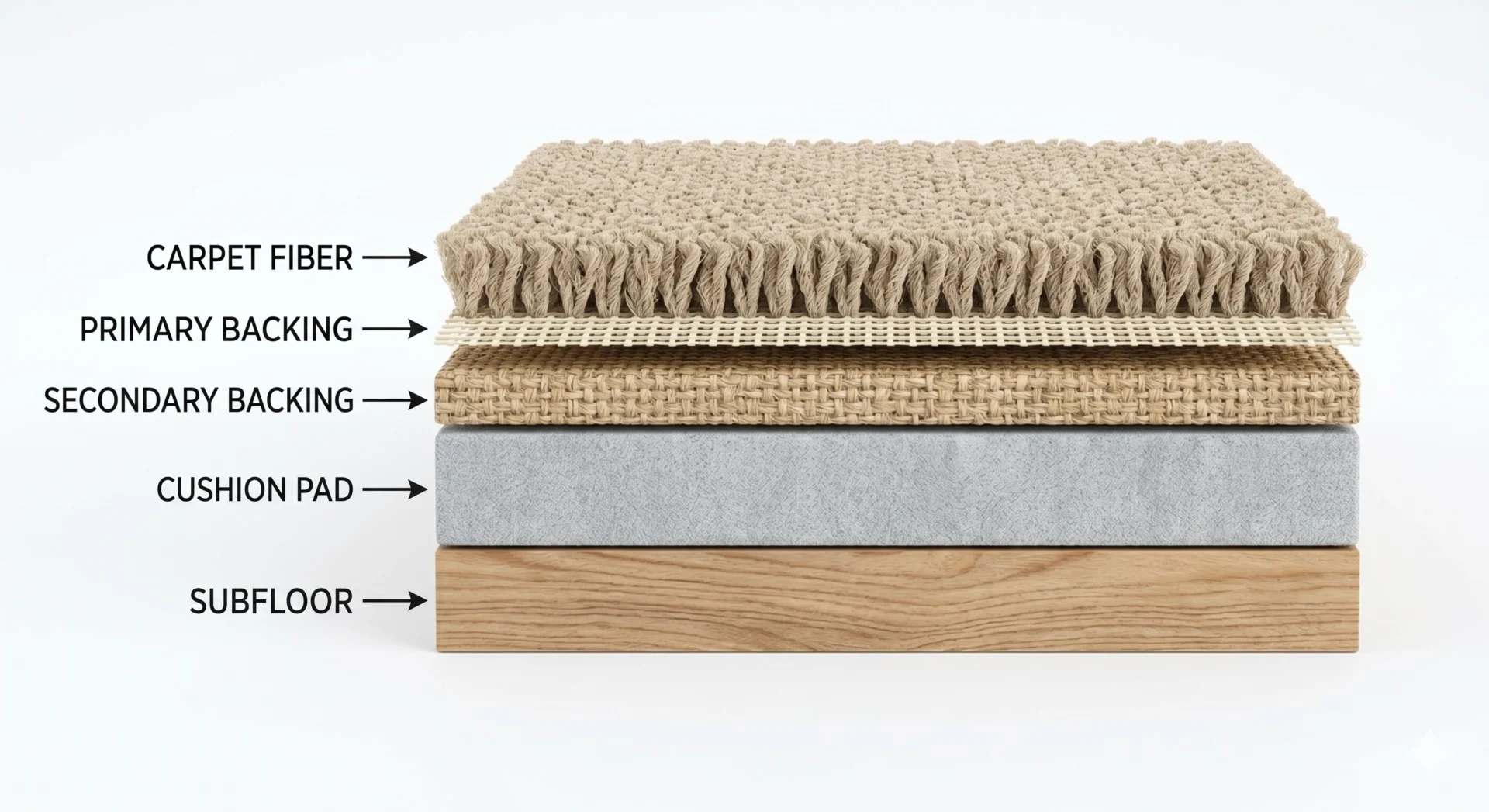
The carpet cushion underneath your carpet is not filler material. It is the shock absorber, the sound barrier, the moisture shield, and the single biggest factor in whether your new carpet still looks good in three years or starts showing its age before your youngest kid finishes middle school. If you have a carpet project in mind, this guide will help you ask the right questions before you spend a dollar.
Why Billings Homes Need Better-Than-Basic Carpet Cushion
Here in south-central Montana, carpet cushion is not just about comfort underfoot. It is about subfloor survival.
Billings sits in a semi-arid climate with average annual precipitation around 14 inches, but the humidity story is more complicated than that number suggests. Winter indoor humidity in a well-insulated Billings home can drop to 15 to 20 percent, which is dryer than the Sahara Desert on a calm day. By late spring, when snowmelt and rain combine, indoor humidity can push past 60 percent in basements and main-floor rooms with minimal vapor management. That seasonal swing puts serious mechanical stress on subfloors, and the pad you choose either buffers that movement or transfers it directly into your carpet backing.
Billings Heights and West End neighborhoods have a high proportion of slab-on-grade construction from the 1970s and 1980s. Those homes sit beneath the Rimrocks, and the geology that makes the Rimrocks such a dramatic landmark also means the ground beneath them holds and releases moisture in ways that catch homeowners off guard. Slabs here retain moisture differently than crawl-space foundations in wetter climates, because the frost line in Yellowstone County sits around 36 inches and winter ground moisture wicks upward rather than draining away. A pad without a moisture barrier on a Billings slab is an invitation for mold to establish under your carpet before you ever smell it.
For anyone doing flooring installations in Billings Heights, this is the first conversation we have. Not the carpet style, not the color, but what is underneath.
Pro Tip from the Carpet Barn Team
In Billings Heights and West End, we consistently see subfloor moisture readings that catch homeowners off guard, even on upper floors. Before we quote any carpet installation, we recommend a moisture assessment, especially in rooms with exterior walls or over a garage. That five-minute conversation can save you a full reinstallation later.
What Actually Separates a Good Carpet Cushion from a Bad One
Not all carpet pads share the same density, and not all thick pads are better. Here are the four dimensions that actually matter for Billings homeowners.
Density: The Number That Predicts Longevity
Density is measured in pounds per cubic foot. For most residential cut-pile carpets, manufacturers require a minimum 6 lb density pad to maintain warranty compliance. For loop-pile and Berber carpets, the requirement is typically a firmer pad at no more than 3/8 inch thickness. Always check your specific carpet’s warranty spec before selecting a pad. Anything below the manufacturer’s minimum compresses permanently within 18 to 24 months and transfers that soft, spongy feeling directly into visible carpet ripples and tracking.
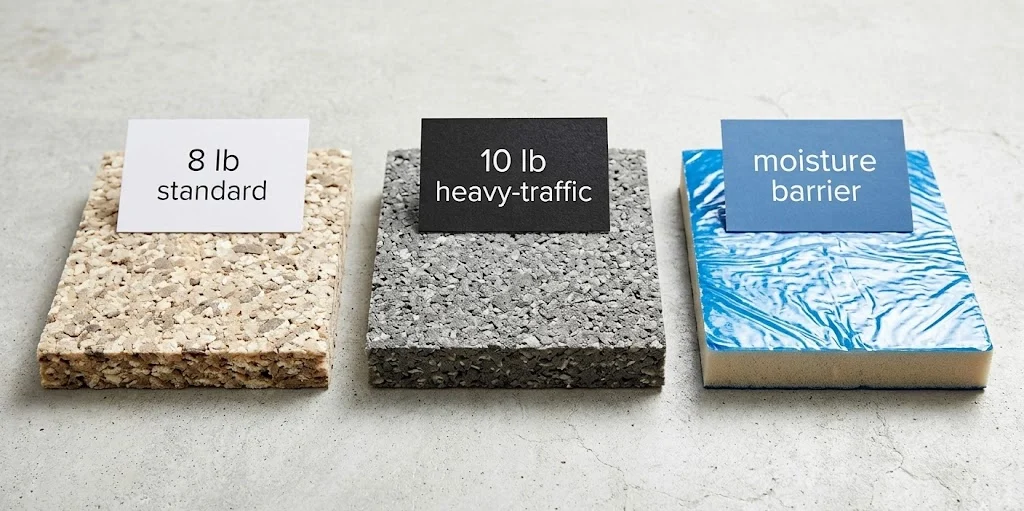
A 10 lb pad adds meaningful crush resistance for living rooms and hallways with regular foot traffic. In our experience, most Billings families with kids and pets notice a real difference in how the carpet holds up when they step up from an 8 lb to a 10 lb. If you are also thinking about the best carpet for high-traffic rooms, pad density is just as important as the fiber choice above it.
Thickness: More Is Not Always Better
The industry standard for residential carpet cushion runs between 7/16 inch and 1/2 inch. Thicker pads above 1/2 inch feel luxurious underfoot but create problems at door thresholds, cause carpet seams to shift under foot traffic, and can void manufacturer warranties on most residential carpets, including cut-pile, Berber, and loop-pile styles. Most Shaw and Mohawk residential warranties cap pad thickness at 7/16 inch regardless of carpet type. For Billings stair runners specifically, we recommend no more than 7/16 inch to avoid the leverage-and-bunching problem that develops on high-use stairs over time.
Moisture Barrier: Non-Negotiable for Billings Slabs
A moisture barrier pad adds a film layer on the underside that prevents ground-source moisture from migrating into the carpet backing. For any room on or below grade in Billings, this is not optional. It is the difference between a carpet that lasts 12 years and one that develops an odor problem in four.
Acoustic Performance: More Relevant Than Most Homeowners Expect
Carpet cushion contributes to both IIC (Impact Isolation Class) and STC (Sound Transmission Class) ratings. IIC measures how much impact noise, think footsteps and dropped objects, travels between floors. STC measures airborne sound transmission, such as voices and TV audio passing through the ceiling. Both matter for two-story homes and finished basements under main living areas. For best results, look for pads with an IIC rating of 50 or above for upper-floor bedrooms or any room over a finished space.
“Great service, got a lot of different carpets to choose from in our price range. Installation was excellent.”
Billings Homeowner | Carpet installation
What Carpet Cushion Actually Costs in Billings, MT
Here is where it gets interesting. Most homeowners budget for carpet and treat the pad as an afterthought. The numbers below show why the pad deserves its own line in your project budget.
Note: Most full installation quotes from Carpet Barn bundle pad into the project price. These cost ranges help you understand the value of each upgrade tier. Ask your specialist to show pad options as a separate line item so you can compare them directly.
|
Cushion Type |
Cost Range (per sq ft installed) |
Best For |
Local Notes |
|---|---|---|---|
|
Rebond foam, 6 lb |
$0.50 to $0.75 |
Budget rentals, secondary bedrooms |
Minimum spec for most Billings rental units; not recommended for slab-on-grade |
|
Rebond foam, 8 lb |
$0.75 to $1.10 |
Main floor residential, most carpet warranties |
Standard recommendation for Billings West End and Heights homes on slab |
|
Rebond foam, 10 lb |
$1.00 to $1.50 |
High-traffic hallways, stairs, family rooms |
Best value for families with kids and pets in Billings-area homes |
|
Memory foam (visco-elastic) |
$1.50 to $2.50 |
Primary bedrooms, luxury installs |
Performs well in Billings’ dry winters; maintains loft better than standard rebond |
|
Moisture barrier rebond |
$1.20 to $1.80 |
Slab-on-grade, basements, over concrete |
Non-negotiable for Billings Heights and West End slab construction |
Pricing based on Billings-area regional contractor data and HomeAdvisor local averages, 2025 to 2026. Verify current rates with your Carpet Barn specialist.
Upgrading from a 6 lb to a 10 lb pad on a standard 1,000 sq ft main floor typically adds $400 to $700 to the total project cost. A moisture barrier upgrade for a slab-on-grade home runs $500 to $800 for the same footprint. Compare that to the cost of remediating a moldy carpet and pad plus reinstallation, which runs $3 to $6 per square foot in this market. The math on the upgrade is not close.
10-Year Cost Comparison — 1,000 sq ft main floor
6 lb pad installed: ~$625 | Lifespan: 7 to 8 years | Annualized cost: ~$83/yr10 lb pad installed: ~$1,250 | Lifespan: 11 to 13 years | Annualized cost: ~$104/yrThe 10 lb upgrade costs roughly $21 more per year and buys four to five additional years of carpet life in the Billings climate. On the moisture barrier question, the math is even simpler: one moisture event costs more than the barrier will ever cost.
What drives price variation in Billings specifically: material availability (certain premium pad products require a longer lead from regional distributors), the complexity of stair installations, and whether an existing pad needs to be removed and disposed of. Removal of old pad and tack strip adds another $0.20 to $0.40 per square foot.
“Honestly, the pad upgrade is the best value we offer. Most people agonize over carpet brand for an hour, then skip the $0.25 per square foot pad step-up that would have made any carpet last years longer. I always put the 10-year math in front of them and let the numbers do the talking.”
Astasia Girard, Flooring Specialist — Carpet Barn
Want a quote built around your actual space? Stop by our showroom at 2032 Grand Avenue any day this week. No appointment needed.
Living With Your Carpet: What the Pad Has to Do With Long-Term Performance
Most homeowners never think about their carpet pad again after installation day. Here is what actually happens to it over time in a Montana home.
Dry Billings winters cause static charge to build in low-density foam pads, drawing fine dust particles deeper into the carpet fiber. Regular vacuuming, at minimum once per week in high-traffic areas, pulls that dust before it works its way into the backing. According to the World Floor Covering Association, improper vacuuming is one of the leading causes of premature carpet wear, and the pad density underneath directly affects how effectively a vacuum’s suction reaches the base of the fiber. Vacuum settings should also match your carpet pile type. A beater bar set too aggressively on a loop-pile carpet accelerates fiber damage faster than most people realize.
Wet spring months bring a different risk. A rebond foam pad without a moisture barrier will absorb and hold water against the carpet backing for weeks if moisture reaches it through a spill or subfloor migration. You will not see mold. You will smell it. If you suspect moisture damage under an installed carpet, call a professional before pulling it up yourself. Improper removal can disturb mold colonies and significantly increase remediation costs. Our team offers free in-home measurements and can assess subfloor conditions before any installation begins. That assessment costs nothing and can catch moisture issues before they become a full replacement.
One maintenance mistake that quietly shortens carpet life in this region: placing rubber-backed area rugs directly on carpet. The rubber traps heat and moisture against the carpet fiber and causes a specific pattern of color loss and matting that looks like a stain but is actually heat and pressure damage. Use rug pads under any area rug placed on carpet.
The line between DIY maintenance and calling a professional is simple. Rippling, buckling, or lifted seams require professional repair. Rippling after installation most often traces back to one of three causes: pad compression failure, improper stretch during the original install, or inadequate acclimation before install. A professional can diagnose which factor is at play in about ten minutes.
“Work complete timely, expertly and just as promised. Would highly recommend.”
Billings Homeowner | Carpet installation
How to Choose a Carpet Installer in Billings, MT
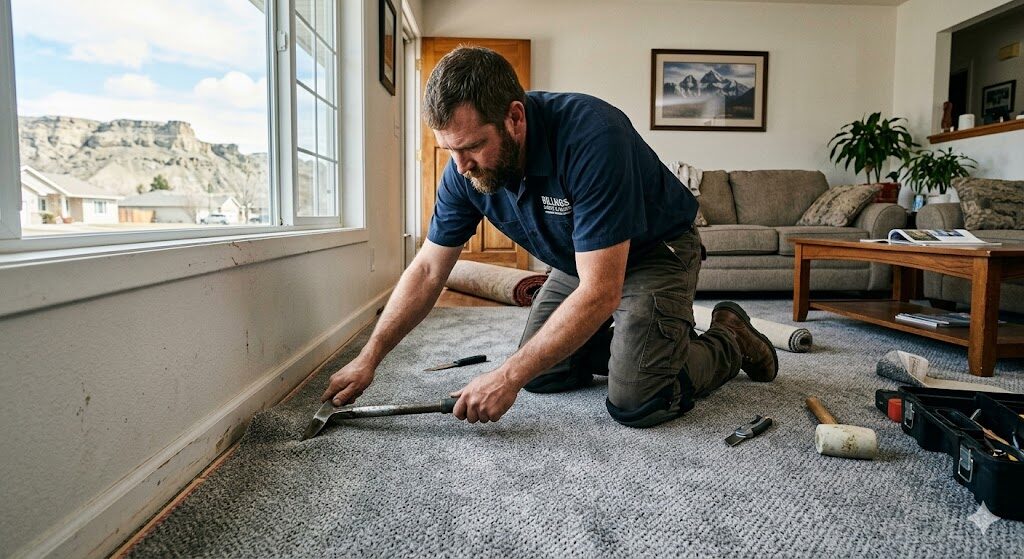
Choosing carpet cushion is only half the decision. The pad you select is only as good as the installer who puts it down. Here is what to ask any flooring contractor in the Billings area before you commit.
- Ask what moisture testing method they use on concrete subfloors. A basic moisture meter screening can be done quickly on-site, but the ASTM-standard tests for concrete subfloors, either a calcium chloride test (ASTM F1869) or an in-situ relative humidity probe (ASTM F2170), require 24 to 72 hours of slab exposure. Ask your installer which method they use and when they plan to run it.
- Ask what pad density they recommend for your specific carpet and traffic level, and why. “It’s what we stock” is not a specification. It is a convenience decision that may not match your carpet’s warranty requirements.
- Ask for installation warranty terms in writing. Vague language like “we stand behind our work” is not a warranty. A real warranty specifies what failures are covered, for how long, and who assesses the defect.
- For basement slab installs, confirm that a moisture barrier pad is specified before discussing anything else. The pad barrier does far more to protect the installation than any hardware upgrade.
“Carpet Barn offers a wide selection of quality carpets with excellent customer service. Don provided professional assistance throughout the purchasing process, ensuring a smooth and satisfactory experience.”
Billings Homeowner | Carpet purchase
At Carpet Barn, our installers are licensed and insured under the Pierce Promise, which provides direct customer advocacy if any material or installation issue arises after the job is complete. We carry a full range of cushion options, from standard 8 lb rebond to moisture barrier pads to premium memory foam (a visco-elastic foam layer that conforms to foot pressure, unrelated to bedding foam despite the shared name). Our team carries over 180 years of combined flooring experience across sales, design, and installation.
“The number one thing I tell customers is to match the pad to the subfloor before you match it to the carpet. In Billings, that usually means starting the conversation with: do you have concrete under there?”
Astasia Girard, Flooring Specialist — Carpet Barn
Frequently Asked Questions
How much does carpet cushion add to my total project cost in Billings?
For a standard 1,000 sq ft main floor installation in the Billings area, upgrading from a 6 lb to a 10 lb pad typically adds $400 to $700 to the total project cost. A moisture barrier pad upgrade for a slab-on-grade home in Billings runs $500 to $800 for the same footprint. Both upgrades typically extend carpet life by three to five years in Montana’s climate, which more than offsets the upfront cost when spread across the life of the floor.
Does Billings’ dry winter climate affect how carpet cushion performs?
Yes, meaningfully. Indoor humidity below 30 percent causes low-density foam pads to dry out and compress faster than their rated lifespan. In Billings specifically, where winter relative humidity commonly drops to 15 to 20 percent indoors, this is an active factor that separates Montana installations from warmer, more humid markets. Using a higher-density rebond pad (8 lb or above) or a memory foam pad compensates for this by maintaining structural integrity under low-humidity compression cycles.
My basement has never had a moisture problem. Do I still need a moisture barrier pad?
In our experience working with Billings homeowners, that is the most common thing we hear right before a moisture issue shows up. Slab-on-grade construction in the Billings area wicks ground moisture upward regardless of visible water history, and it is nearly always invisible until the carpet backing is already compromised. A moisture barrier pad adds roughly $0.30 to $0.50 per square foot in the Billings market. A full carpet and pad replacement after a moisture event runs $3 to $6 per square foot. We recommend the barrier every time on concrete, no exceptions.
What is the difference between IIC and STC ratings for carpet cushion?
IIC (Impact Isolation Class) measures how much impact noise, footsteps and dropped objects, travels between floors. STC (Sound Transmission Class) measures airborne sound, voices and television audio, passing through the ceiling. Both ratings improve with a higher-density pad and denser carpet combination, which is why the upgrade from 8 lb to 10 lb pays off in Billings two-story homes beyond just longevity. If acoustic performance matters for your household, ask your Carpet Barn specialist to show you pad options with labeled IIC ratings of 50 or above.
Can the wrong carpet cushion void my carpet warranty?
Yes, and this happens more often than most Billings homeowners realize. Major manufacturers including Shaw, whose products Carpet Barn carries as an authorized dealer, and Mohawk set pad specifications by carpet type. Cut-pile, Berber, and loop-pile carpets each carry their own minimum density and maximum thickness requirements, and using a non-compliant pad is one of the most common warranty claim denials we see in this market. Before you purchase a pad separately or accept a bundled pad without reviewing specs, confirm the pairing is within your carpet manufacturer’s requirements.
Ready to Find the Right Carpet Cushion for Your Home?
The cushion decision is simple once you know your subfloor type, your room’s traffic pattern, and your carpet’s manufacturer requirements. Our team at Carpet Barn can walk you through all three in about fifteen minutes, and we carry the pad inventory to back up whatever combination makes sense for your project.
Stop in any day this week, no appointment needed. Before you come in, try visualizing different carpet styles in your actual room with our Room Visualizer. Ask about our 0% financing options. A cushion upgrade that adds $500 to a project looks very different when it is spread across a zero-interest payment plan.
Carpet Barn is an authorized Shaw dealer, a member of the National Flooring Alliance, and holds a BBB A+ rating. Those are credentials earned across more than 50 years at the same Billings address.
Author: Astasia Girard, Flooring Specialist — Carpet Barn
World Famous Carpet Barn
2032 Grand Avenue, Billings, MT 59102 | (406) 656-2824
Monday through Friday 7:30 AM to 6:00 PM | Saturday 8:30 AM to 5:00 PM
Serving Billings since 1972. Part of the Pierce family of Montana businesses since 1924.