- Flooring
The Complete Guide to Waterproof Flooring in Montana
March 13, 2026
The Floor That Survived a Billings Winter — And the Ones That Didn’t
Last January, a homeowner in Lockwood came into our showroom on Grand Avenue with a familiar problem: the laminate they’d installed in their mudroom three years earlier had buckled along the seams. Not from a flood, just from a season of wet boots, tracked-in snow melt, and the humidity swings that roll through the Yellowstone Valley between October and March.
This isn’t a rare story. It’s one we hear a few times every winter.
The good news is that in 2026, the waterproof flooring category has matured to the point where this kind of failure is entirely avoidable, if you choose the right product for how Billings actually behaves. This guide focuses on homes in and around Billings, though the climate and subfloor principles apply across Montana’s semi-arid eastern corridor from Miles City to Glendive. It walks through which products hold up, which ones look good on a spec sheet but disappoint after year two, and what to ask before you spend a dollar on installation.
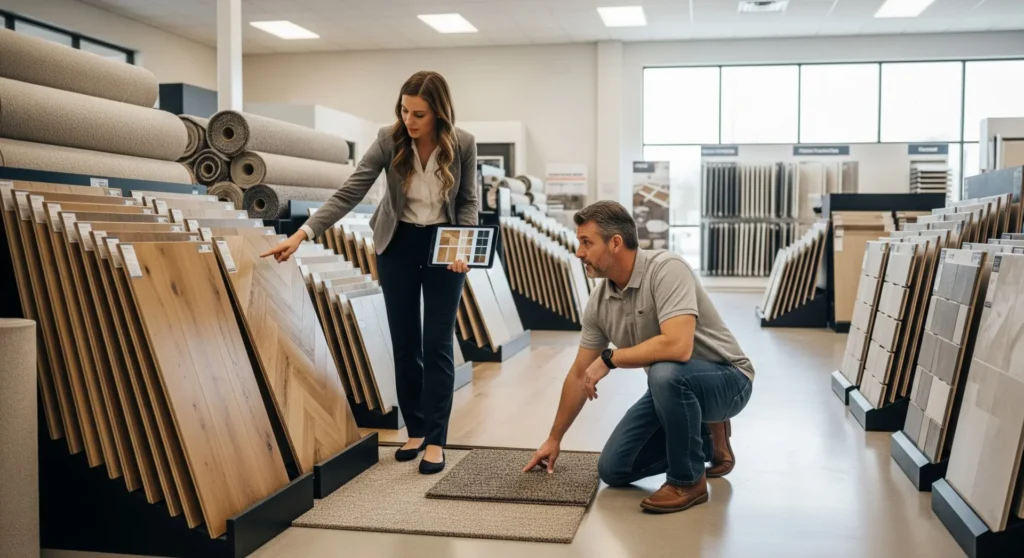
Ready to look at options in person? Visit our showroom at 2032 Grand Ave, or call us at (406) 656-2824. We offer free in-home measurements and free project estimates, no pressure, no obligation.
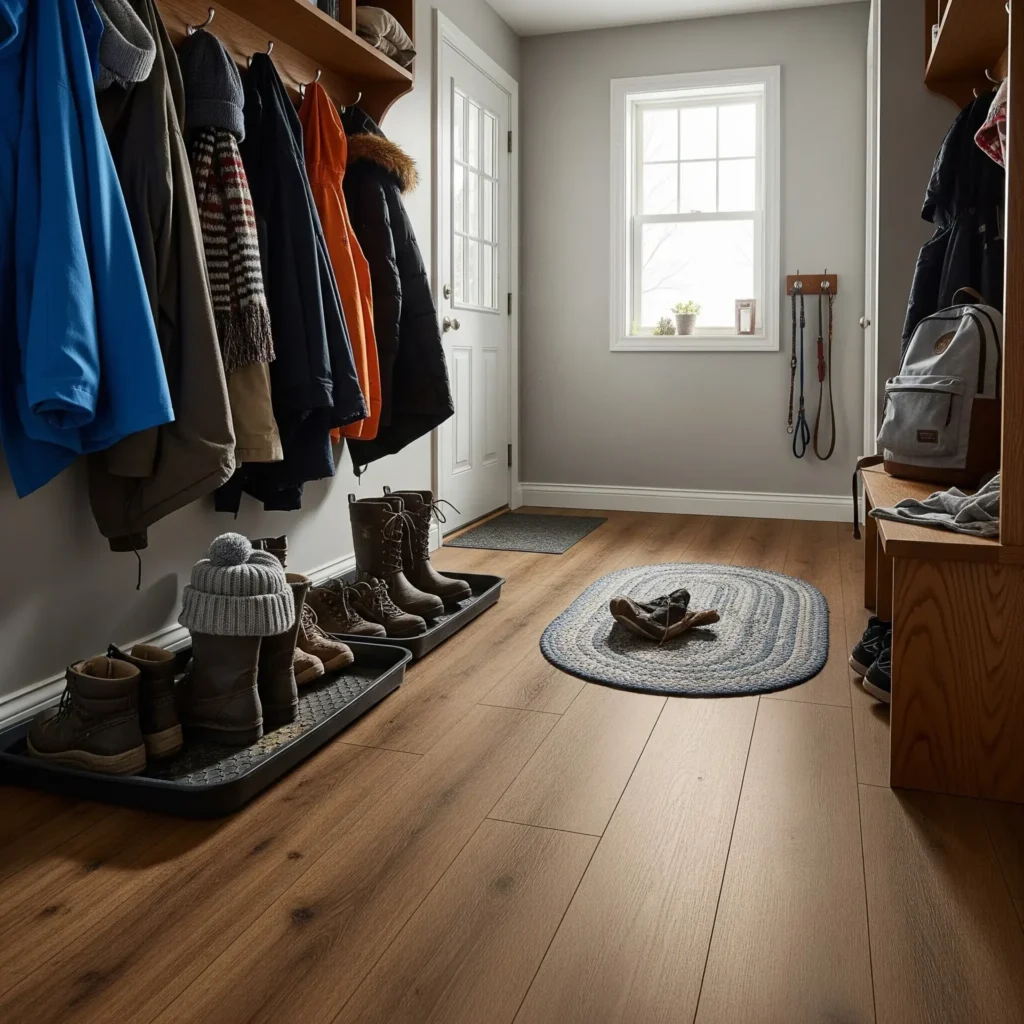
Why Billings Is Harder on Floors Than Most Cities in the Rockies
Billings sits in a semi-arid steppe climate, drier than most people expect for Montana, but far more temperature-volatile than most homeowners budget for when choosing flooring.
The temperature swing is the real issue. Year-round, Billings sees lows near 18°F in January and highs pushing 89°F in July. That is a swing of roughly 70 degrees Fahrenheit over the course of a year. Any flooring material that expands and contracts with temperature changes runs that full range, over and over, for the life of the floor.
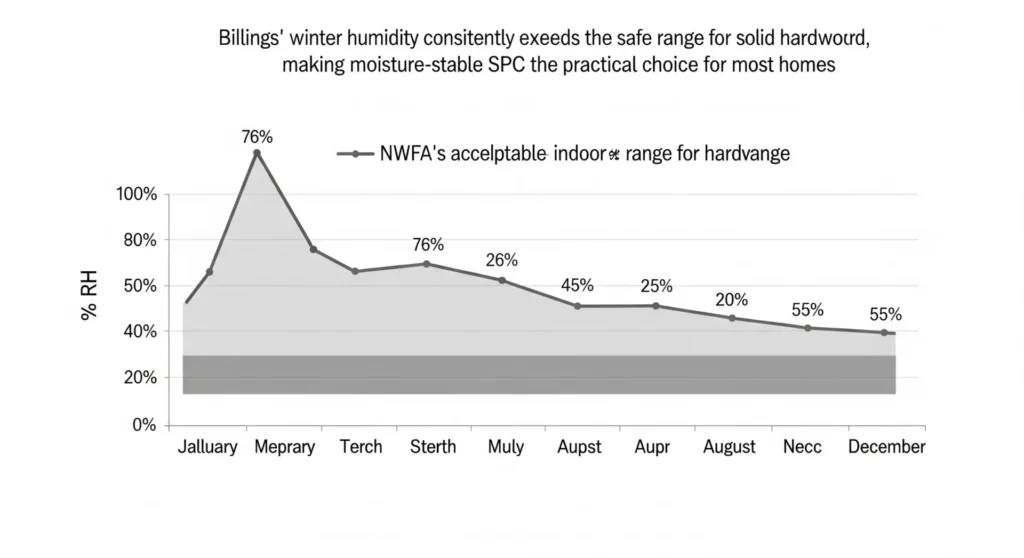
The humidity is low, but it isn’t stable. Annual average humidity in Billings sits around 55%, which sounds manageable. But the seasonal shift is dramatic: 76% in January as snow and ice dominate, dropping to around 45% by August, a 31-point swing. According to the National Wood Flooring Association, solid hardwood requires indoor humidity to stay between 35–55% year-round to perform correctly. Billings winters routinely push above that ceiling without a humidifier, and summer air-conditioning pulls moisture back down fast.
The soil adds another layer of complexity. Much of Billings, particularly in lower-elevation areas along the Yellowstone River corridor, sits on fine-silty soils that drain slowly and hold ground moisture longer than sandy soils. In older neighborhoods like the South Side and lower Heights, homes with slab-on-grade construction can experience subfloor moisture migration during spring thaw, especially in basements and first-floor rooms directly over concrete. That moisture doesn’t announce itself. It works slowly, pushing up through porous subfloor materials and attacking floors from below.
Pro-Tip — World Famous Carpet Barn Flooring Team: In our experience installing waterproof flooring across Yellowstone County, lower-elevation neighborhoods along the Lockwood and Laurel Road corridors consistently show elevated subfloor moisture readings during the spring thaw period compared to higher-elevation areas like the West End. Skipping the moisture test before installation is the single most common shortcut that leads to warranty disputes down the road, and it costs nothing to do it right.
The practical implication: choosing “waterproof” flooring is not enough on its own. The subfloor prep, the expansion gap management, and the installation method matter just as much as the product itself. That is where working with an experienced local installer pays off in ways a big-box DIY kit cannot replicate.
Which Waterproof Floor Is Actually Right for Your Home?
Not all waterproof flooring is the same, and “100% waterproof” on a label describes the product, not the installation. Here is an honest comparison of the three categories that make the most sense for Billings homeowners in 2026.
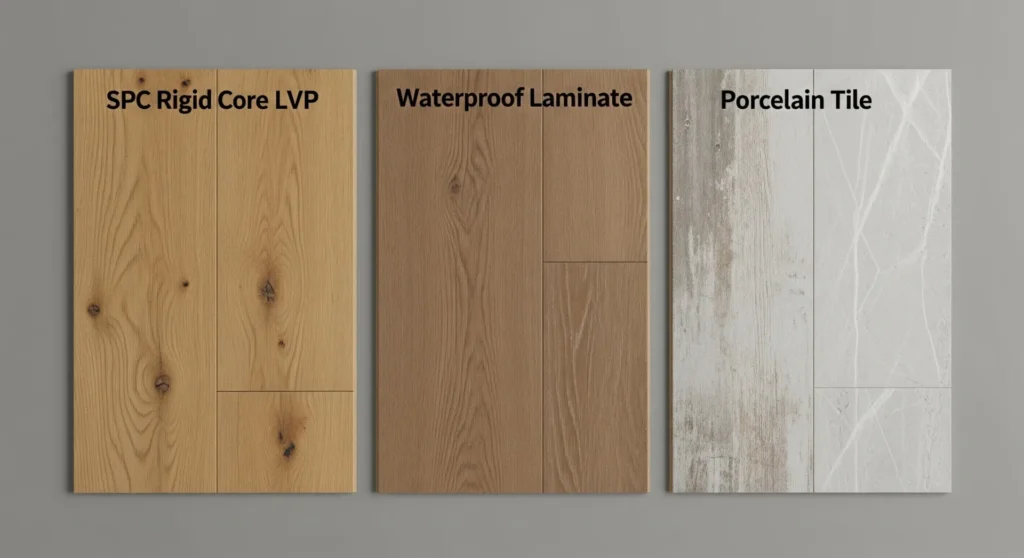
Luxury Vinyl Plank and Tile (LVP/LVT): The Practical Workhorse
Luxury vinyl plank is the most popular waterproof flooring choice in Billings right now, and for good reason. The 100% waterproof core handles standing water, pet accidents, and boot-zone moisture without swelling or delaminating. It is softer underfoot than tile, warmer in feel than stone, and far more comfortable in a Billings winter where you want cushion underfoot at 6 AM.
The key distinction in 2026 is between basic flexible LVP and rigid core SPC (Stone Plastic Composite) plank. Rigid core SPC is built with a dense mineral core that does not flex, bend, or gap at temperature extremes. In Billings homes, especially those with in-floor heating or large temperature swings between a heated main floor and an unheated garage transition, SPC outperforms flexible vinyl significantly. It stays flat. It doesn’t open up at seams during a cold snap.
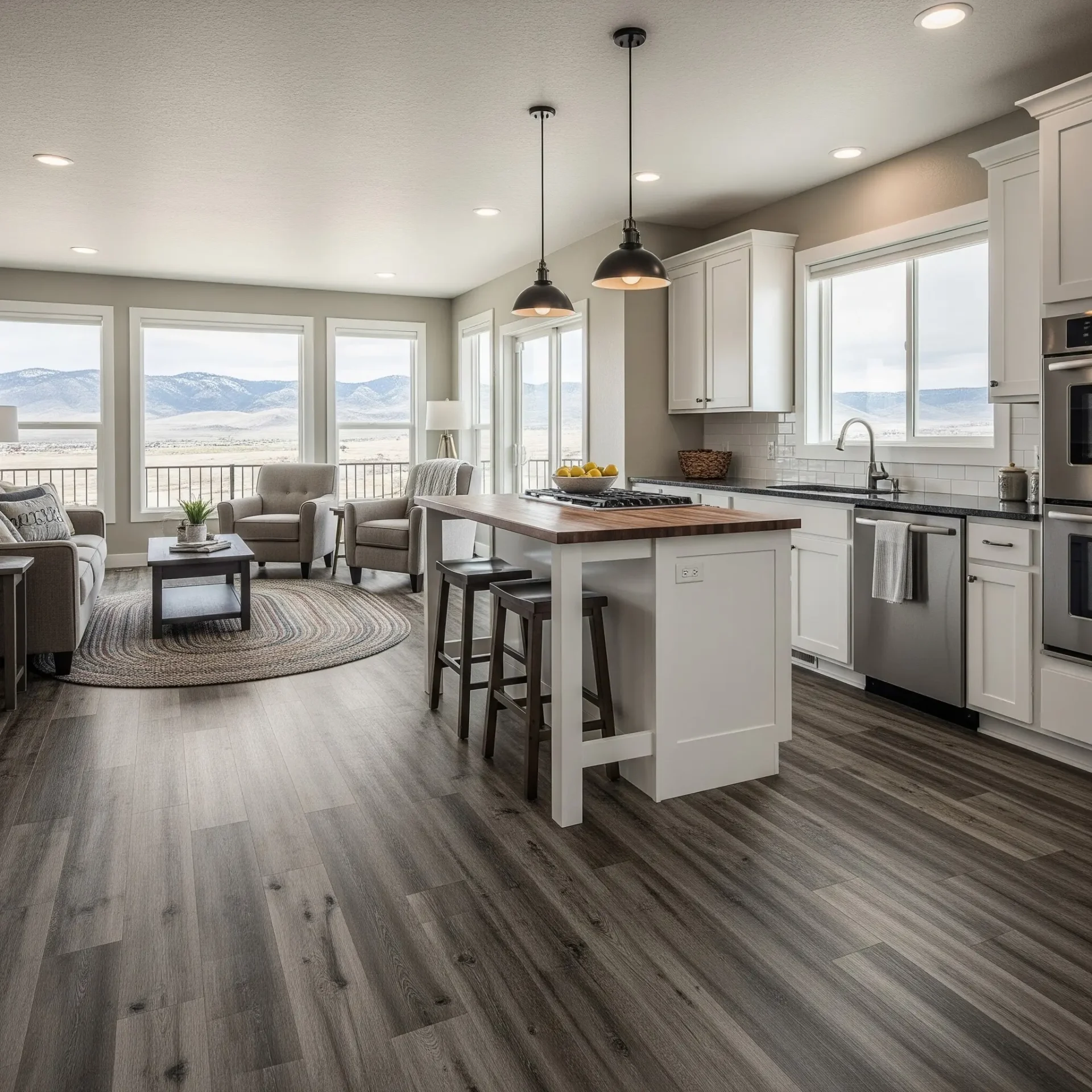
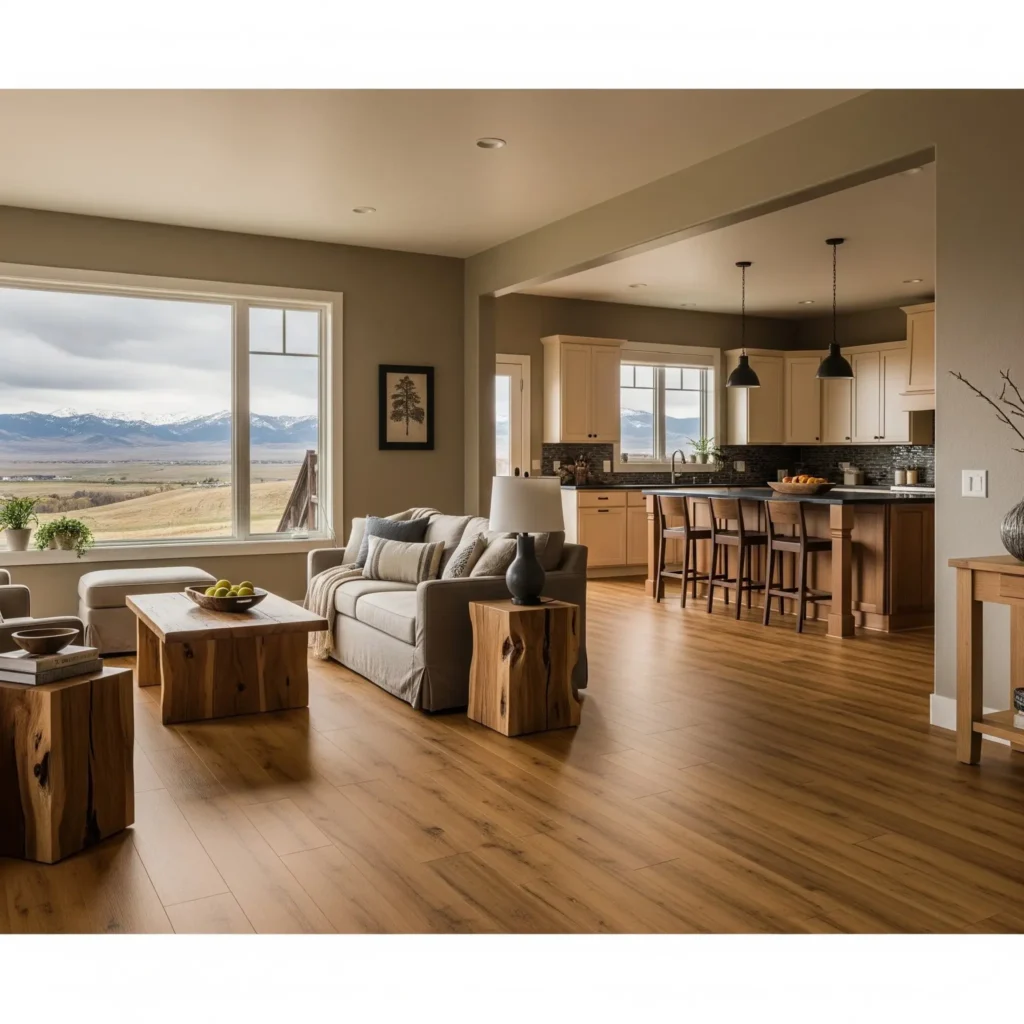
Premium SPC products from brands like Cali, Shaw, and Mannington now rival engineered hardwood visually. The EIR texture, where the surface grain aligns perfectly with the printed image underneath, has advanced to the point where homeowners who walk in wanting “the wood look” are often surprised how close premium SPC gets to the real thing, without any of the moisture risk. Wide plank formats (7 inches and wider) work especially well in Billings open floor plans. Warm wood tones like honey oak and matte natural grain are replacing the gray-heavy palette of the previous decade and photograph beautifully against the Montana landscape visible through large windows.
Many mid-range and premium SPC planks include attached underlayment, which improves sound dampening, a practical benefit in Billings homes with hardwood subfloors above finished basements. If a product you’re considering doesn’t include attached underlayment, factor in an additional $0.50–$1.00 per square foot for a separate pad.
Best for: Mudrooms, kitchens, bathrooms, basements, main living areas, any room with moisture exposure, homes with dogs or active outdoor lifestyles.
Honest tradeoff: Entry-level LVP with thin wear layers (under 12 mil) shows scratches and indentation from heavy furniture faster than mid-grade or premium product. For active Billings households with hunting retrievers, ranch work-boots, or large-breed dogs, look for a wear layer of at least 12 mil for reliable everyday performance, with 20 mil offering commercial-grade durability for the most demanding conditions.
Before you visit, try our Room Visualizer to preview any LVP or SPC product in a photo of your actual space.
Waterproof Laminate: Better Than Its Reputation, With Conditions
Waterproof laminate has improved substantially. Today’s products use sealed edges and water-resistant cores rather than the traditional wood-pulp HDF that would swell and buckle when wet. Brands like Shaw Floors offer laminate options with genuine water-resistance claims backed by multi-hour standing water tests, and leading products with factory-sealed edges perform significantly better than standard laminate in moisture-prone situations.
The distinction still matters: water-resistant laminate handles splashes and spills. Truly waterproof laminate handles longer exposure. Most waterproof laminate products remain somewhat moisture-sensitive at cut edges and end joints, though sealed-edge technology has narrowed that gap considerably. Read the specific product warranty language carefully.
For Billings homes, waterproof laminate works well in dining rooms, living rooms, bedrooms, and home offices, rooms where moisture is incidental rather than routine. It should not be the first choice for mudrooms, bathrooms, or any room with a concrete subfloor below grade. The hardwood-authentic sound underfoot and the slightly warmer feel compared to LVP make it popular for main living areas where comfort and aesthetics both matter.
Best for: Main living areas, bedrooms, above-grade installations. Works well in the ranch-style homes common to the West End and Rimrock Road neighborhoods where main-floor living is the norm.
Honest tradeoff: Laminate cannot be refinished. When the wear layer is gone, the floor is done. LVP is the more flexible long-term investment for high-traffic areas.
Tile and Natural Stone: The Waterproof Original
Tile is the original waterproof floor and it remains the right answer for bathrooms, laundry rooms, and utility spaces. Porcelain tile is fired at temperatures that make it nearly impermeable to water, and properly grouted large-format porcelain is as close to bulletproof as flooring gets.
The challenge in Billings is installation. Tile requires a very stable, crack-free substrate. Billings’ seasonal freeze-thaw cycles create subfloor movement risk, particularly in older homes and unheated spaces. Grout failure in entry zones is a real issue when tile is laid over a subfloor that moves with temperature. A proper mortar bed and crack isolation membrane are not optional in this climate. They are what separate a tile floor that lasts 30 years from one that needs regrouting in three.
For Billings-area homeowners considering large-format tile (24×24 or larger), the same applies. The grout joints are smaller, which looks cleaner, but any subfloor flex shows up immediately in a large-format installation. Hire an installer who takes subfloor prep seriously, not just one who can lay the tile quickly.
Best for: Bathrooms, mudrooms, laundry rooms, commercial spaces, kitchens.
Honest tradeoff: Cold underfoot without in-floor heating, which is worth considering in a Billings winter. Installation costs are higher than LVP. Repair is harder because matching tile after years of production changes can be difficult.
“We use Carpet Barn for all of our home builds and remodels. They’re always on point. Great deals, and customer service couldn’t be better. We LOVE carpet barn!” – Ryan Driscoll, Billings, Luxury Vinyl Plank, Carpet
What Does Waterproof Flooring Actually Cost in Billings?
Flooring pricing in Montana runs slightly higher than national averages for mid-range and premium products because of shipping logistics and regional labor demand. Here is a realistic installed cost table based on 2025–2026 market data. These are estimates — actual quotes vary based on subfloor condition, room complexity, and material selection.
Waterproof Flooring — Estimated Installed Cost (Billings, MT)
|
Flooring Type |
Total Installed (per sq ft) |
Billings Notes |
|---|---|---|
|
Entry LVP (flexible, 4–8 mil wear layer) |
$3.50–$7.00 |
Fine for low-traffic rooms; not ideal for mudrooms |
|
Mid-Range SPC Rigid Core LVP (12–20 mil) |
$5.00–$9.50 |
Best value for Billings climate conditions |
|
Premium SPC / WPC LVP (20+ mil, wide plank) |
$7.50–$12.00 |
Best long-term performance; EIR texture available |
|
Waterproof Laminate |
$4.50–$9.50 |
Above-grade rooms; not for basements |
|
Porcelain Tile (standard format) |
$7.00–$14.00 |
Subfloor prep adds cost in older Billings homes |
|
Natural Stone |
$11.00–$24.00+ |
Premium; requires crack isolation membrane in MT |
Entry LVP (flexible, 4–8 mil wear layer)
Total Installed (per sq ft)
$3.50–$7.00
Billings Notes
Fine for low-traffic rooms; not ideal for mudrooms
Mid-Range SPC Rigid Core LVP (12–20 mil)
Total Installed (per sq ft)
$5.00–$9.50
Billings Notes
Best value for Billings climate conditions
Premium SPC / WPC LVP (20+ mil, wide plank)
Total Installed (per sq ft)
$7.50–$12.00
Billings Notes
Best long-term performance; EIR texture available
Waterproof Laminate
Total Installed (per sq ft)
$4.50–$9.50
Billings Notes
Above-grade rooms; not for basements
Porcelain Tile (standard format)
Total Installed (per sq ft)
$7.00–$14.00
Billings Notes
Subfloor prep adds cost in older Billings homes
Natural Stone
Total Installed (per sq ft)
$11.00–$24.00+
Billings Notes
Premium; requires crack isolation membrane in MT
Material and labor detail: Entry LVP runs $1.50–$3.50 material + $2.00–$3.50 labor. Mid-range SPC: $3.00–$6.00 material + $2.00–$3.50 labor. Premium SPC/WPC: $5.00–$8.00 material + $2.50–$4.00 labor. Waterproof laminate: $2.50–$6.00 material + $2.00–$3.50 labor. Porcelain tile: $3.00–$7.00 material + $4.00–$7.00 labor. Natural stone: $6.00–$15.00+ material + $5.00–$9.00 labor. Source: HomeGuide, My Home Pros, national installer benchmarks 2025–2026.
Add $1.50–$3.00 per sq ft for subfloor leveling or moisture barrier installation, common in below-grade and spring-thaw-exposed areas of Billings. All installed quotes include materials, labor, and standard subfloor prep; line items vary by project.
Three things specifically drive price variation in Billings. First, subfloor condition: older homes in neighborhoods like the South Side, North Park, and downtown-adjacent areas often have original concrete or plywood subfloors that require leveling work before installation, costs that do not appear on the product tag. Second, seasonal labor demand: spring and fall are peak renovation seasons in Yellowstone County, and lead times lengthen. Third, material availability: some premium SPC and wide-plank products ship from regional distribution centers rather than being stocked locally, adding a week or two to project timelines.
Want a quote built around your actual space? Request a free in-home measurement — our team comes to you, assesses your subfloor, and builds an estimate around your specific room. Or visit our showroom any day this week, walk-ins welcome, no appointment needed.
Living With Waterproof Floors Through a Montana Year
The right product installed correctly is only half the equation. How you care for it across Billings’ seasons determines how long it performs.
Winter (October–March): This is when most floor damage happens, not from water itself, but from what comes in with the water. Salt, sand, and fine grit tracked in on winter boots act like sandpaper on any wear layer. Place quality entry mats at every exterior door and shake them out weekly. A microfiber dust mop is the preferred daily tool for LVP and SPC floors, capturing fine grit without the brush-roll friction that some vacuums introduce and that can leave micro-scratches on low-sheen matte finishes over time. Always dust-mop before any wet mopping. Use a damp mop, not a wet one, on floating floors.
Spring thaw (March–May): This is when subfloor moisture is highest in lower-elevation Billings homes. If you have a floating LVP or laminate floor over concrete, keep an eye on expansion gaps along baseboards. Slight changes are normal. Visible buckling or gapping that persists is a sign of a moisture event below the floor, not just the product expanding normally.
Summer (June–August): Billings summers are hot and dry. Indoor humidity can drop below 35% during July and August heat waves, especially in homes with aggressive air conditioning. For hardwood floors, this is the danger zone for excessive gapping between planks. For LVP and waterproof laminate, the low humidity is less destructive, but direct sun exposure through west-facing windows can cause surface fading, particularly on entry-level and mid-grade products without UV inhibitors in the wear layer. Premium SPC products from established brands typically include UV stabilizers that significantly extend fade resistance. UV-rated window film on those exposures extends floor life further regardless of product tier.
The one maintenance mistake that shortens floor life in this region: Using a steam mop. Steam mops are not safe for LVP, laminate, or engineered hardwood. The heat and moisture combination penetrates seams and, over time, breaks down click-lock joints and core materials. A well-wrung damp mop and a pH-neutral cleaner is all any of these floors need. According to the Resilient Floor Covering Institute, steam cleaning voids most resilient flooring manufacturer warranties, a detail that surprises many Billings homeowners who assumed “waterproof” meant steam-safe.
Don was knowledgeable and easy to work with. Very professional and job was completed in a timely manner. The installer, Patrick, was professional and did a great job. I am not finished with my projects and will definitely be back for my next projects.” — Don B., Lockwood, Laminate Flooring
How to Choose a Waterproof Flooring Installer in Billings
Choosing the right floor product matters. Choosing the right installation team matters more.
Here is what to ask before committing to any flooring contractor in Billings or Yellowstone County:
Before any quote is delivered:
- Will someone come to the home in person before measuring? Remote estimates based on square footage alone miss critical subfloor issues.
- Will you do a moisture test before installation begins? Ask specifically about relative humidity probe testing or calcium chloride testing on concrete subfloors. This is standard, not optional.
- How do you handle subfloor prep if leveling is needed? The answer should include specific methods (self-leveling compound, grinding, patching) and a clear cost explanation before the project starts.
What a proper moisture test looks like: Two standard methods are used in the industry. The in-situ relative humidity probe test (ASTM F2170) measures moisture deeper within the concrete slab and is now specified as the primary method by most major manufacturers, particularly important for the thicker slabs common in older Billings construction. The calcium chloride test (ASTM F1869) measures surface vapor emission over 60–72 hours and remains widely used as a secondary check. Acceptable thresholds vary by product: most manufacturers specify a maximum moisture vapor emission rate between 3–8 lbs per 1,000 sq ft per 24 hours on calcium chloride testing, while some waterproof SPC products carry no MVER restriction at all due to their impermeable core. Always confirm which test method and which threshold the manufacturer requires for the specific product being installed, and ask your installer which method they use.
Red flags in any quote:
- No in-person site visit before quoting
- No mention of subfloor assessment or moisture testing
- Warranty language that excludes “moisture-related damage” without defining baseline conditions
- No written breakdown of labor vs. materials vs. prep
At World Famous Carpet Barn, our licensed and insured installation team conducts in-home measurements before every project. Our installers assess subfloor conditions directly and discuss findings with the homeowner before installation begins. The Pierce Promise backs our installation work with a one-year workmanship warranty and manufacturer defect advocacy for the life of the product, a level of accountability that national chain installers subcontracted through a third-party scheduling app simply cannot match.
As a member of the National Floorcovering Alliance and a holder of an A+ rating with the Better Business Bureau, we carry brands and product lines selected specifically for dealer accountability and consumer protection, not just price-point availability.
“When a homeowner asks me ‘what’s the most waterproof floor you carry,’ my first question back to them is always, ‘where is the floor going, and what’s underneath it?’ The product choice is the second conversation. The subfloor is the first.”
— Derrick Tokar, Store Manager, World Famous Carpet Barn
Frequently Asked Questions About Waterproof Flooring in Billings
How much does waterproof flooring installation cost for a typical Billings home?
For a mid-range SPC rigid core LVP — the best fit for most Billings homes — expect to budget $5.00 to $9.50 per square foot installed, including materials and labor. A 200 sq ft kitchen would run approximately $1,000–$1,900; a 1,200 sq ft main floor typically falls in the $6,000–$11,400 range before subfloor prep. Subfloor leveling or moisture barrier installation adds $1.50–$3.00 per square foot on top of that, and is commonly needed in lower-elevation Billings homes over concrete. Always get a line-itemed quote rather than a single lump figure.
Does Billings’ climate affect how waterproof flooring expands and contracts?
Yes, significantly. Billings’ humidity swings from roughly 76% in January to 45% in August. Floating click-lock floors — both LVP and laminate — expand in humid conditions and contract in dry ones. Rigid core SPC manages this better than flexible vinyl or laminate because the dense mineral core limits dimensional change. Proper installation requires a 1/4-inch expansion gap around all walls and fixed objects. In rooms spanning more than 30 feet in any direction, additional T-molding transition breaks may be required per manufacturer specification to prevent buckling, a detail that matters in the open-plan ranch homes common across Billings. An experienced local installer will know this without being asked.
What does the installation process actually look like, from consultation to completion?
Most Carpet Barn projects follow this sequence: free in-home measurement and consultation, product selection and quote (typically 3–5 business days), scheduling confirmation, subfloor prep and moisture assessment on installation day, installation (1–2 days for a standard room, 3–5 days for whole-home projects), and final walkthrough. The Pierce Promise warranty documentation is provided at project completion. Lead times are shortest in winter; spring and fall bookings fill faster given renovation season demand across Yellowstone County.
How do you know when a waterproof floor needs replacing?
For LVP, the wear layer is the signal. The clear protective coating sits above the print layer, and when it thins out in high-traffic zones, you’ll notice sheen loss and a loss of stain resistance. Spills that wipe clean easily in low-traffic areas start to stain in worn zones. Mid-range LVP with 12–20 mil wear layers typically lasts 15–25 years in residential use before showing meaningful wear. For tile, failed grout lines and cracked tiles in traffic areas are the end-of-life signal. Waterproof laminate reaches end-of-life when the surface layer chips or peels — unlike LVP, it cannot be cleaned back to performance.
Is luxury vinyl or waterproof laminate better for Montana winters?
For most Billings homes, rigid core SPC luxury vinyl outperforms waterproof laminate across the full year. The key advantage is true dimensional stability at temperature extremes. SPC cores do not absorb moisture at all, while most waterproof laminate products remain somewhat moisture-sensitive at cut edges and end joints, even in sealed-edge products. In mudrooms, entries, bathrooms, and any room with direct outdoor access, LVP is the more durable choice. Waterproof laminate is a good fit for above-grade rooms away from moisture entry points, where its slightly more authentic hardwood feel underfoot is a preference advantage.
Ready to See It In Person?
The best flooring decision starts with touching the product and talking through the specifics of your home, not browsing a website.
World Famous Carpet Barn has served Billings and communities across eastern and southeastern Montana since 1972, as part of the Pierce family of brands operating in the state since 1924. Our team on Grand Avenue has seen what works here, what fails here, and what the homes and climates of Yellowstone County actually demand.
Stop in any day this week, no appointment needed. Or request a free in-home measurement and we’ll come to you, assess your subfloor, and build an estimate around your specific space.
Try our Room Visualizer to preview flooring products in a photo of your actual room before you commit, or explore financing options through our Shaw credit program if you’re planning a larger project.
World Famous Carpet Barn 2032 Grand Avenue, Billings, MT 59102 cbarn.com | (406) 656-2824 | Toll-Free: (888) 738-2824 Monday–Friday: 7:30 AM–6:00 PM | Saturday: 8:30 AM–5:00 PM
Author: Derrick Tokar, Store Manager, World Famous Carpet Barn